
How Moroccan Leather Is Made in Fes | Traditional Tanning Process Explained
Moroccan leather is known around the world for its exceptional quality, rich colors, and centuries-old craftsmanship. In the heart of Fes, traditional artisans continue to produce authentic handmade leather using techniques that have been preserved for generations. From the famous dye-filled pits of the ancient tanneries to the final handcrafted bags, slippers, and accessories, the process remains deeply connected to Moroccan culture and artisan heritage.
Walking through the historic leather tanneries of Fes is like stepping back in time. Skilled craftsmen work by hand using natural ingredients, traditional vegetable tanning methods, and ancestral knowledge passed from father to son. Unlike mass-produced industrial leather, Moroccan leather is celebrated for its durability, natural texture, and artisanal character, making it one of the most sought-after handmade materials in the world.
We take you behind the scenes of the traditional tanning process in Fes to discover exactly how Moroccan leather is made. You’ll learn about the history of leather craftsmanship in Morocco, the natural tanning methods used by local artisans, and why authentic Moroccan leather products continue to attract travelers, designers, and collectors worldwide.
The History of Moroccan Leather in Fes
The story of Moroccan leather begins more than a thousand years ago in Fes, one of the oldest imperial cities in Morocco and a historic center of craftsmanship, trade, and culture. Since the medieval period, Fes has been internationally recognized for producing some of the finest handmade leather in the world. The city’s strategic location along ancient trade routes helped Moroccan artisans develop advanced tanning techniques that quickly gained a reputation across Africa, the Middle East, and Europe.
Traditional Moroccan leather craftsmanship was heavily influenced by Andalusian, Arab, and Amazigh (Berber) cultures. Families of artisans passed their knowledge from one generation to another, preserving ancient methods that are still used today inside the historic tanneries of Fes. These techniques rely on manual labor, natural dyes, and vegetable-based tanning processes rather than modern industrial chemicals.
One of the most famous landmarks connected to Moroccan leather is the legendary Chouara Tannery, believed to date back to the 11th century. This iconic tannery remains one of the oldest operating leather tanneries in the world. Its stone dye pits, colorful leather vats, and traditional working methods have become symbols of authentic Moroccan craftsmanship and attract visitors from around the globe.
For centuries, Moroccan leather from Fes was exported to Europe and the Middle East, where it became associated with luxury, durability, and elegance. In fact, the English word “morocco” was historically used to describe high-quality leather made in Morocco, especially soft goatskin leather used for books, shoes, and fine accessories.
Today, despite modern manufacturing techniques, the traditional leather industry in Fes continues to thrive. Local artisans still create handmade Moroccan leather products using ancestral methods that preserve the authenticity and uniqueness of this remarkable craft.
The History of Moroccan Leather in Fes
The story of Moroccan leather begins more than a thousand years ago in Fes, one of the oldest imperial cities in Morocco and a historic center of craftsmanship, trade, and culture. Since the medieval period, Fes has been internationally recognized for producing some of the finest handmade leather in the world. The city’s strategic location along ancient trade routes helped Moroccan artisans develop advanced tanning techniques that quickly gained a reputation across Africa, the Middle East, and Europe.
Traditional Moroccan leather craftsmanship was heavily influenced by Andalusian, Arab, and Amazigh (Berber) cultures. Families of artisans passed their knowledge from one generation to another, preserving ancient methods that are still used today inside the historic tanneries of Fes. These techniques rely on manual labor, natural dyes, and vegetable-based tanning processes rather than modern industrial chemicals.
One of the most famous landmarks connected to Moroccan leather is the legendary Chouara Tannery, believed to date back to the 11th century. This iconic tannery remains one of the oldest operating leather tanneries in the world. Its stone dye pits, colorful leather vats, and traditional working methods have become symbols of authentic Moroccan craftsmanship and attract visitors from around the globe.
For centuries, Moroccan leather from Fes was exported to Europe and the Middle East, where it became associated with luxury, durability, and elegance. In fact, the English word “morocco” was historically used to describe high-quality leather made in Morocco, especially soft goatskin leather used for books, shoes, and fine accessories.
Today, despite modern manufacturing techniques, the traditional leather industry in Fes continues to thrive. Local artisans still create handmade Moroccan leather products using ancestral methods that preserve the authenticity and uniqueness of this remarkable craft.
Inside the Traditional Tanneries of Fes
Hidden within the ancient medina of Fes lies one of the city’s most fascinating and historic attractions: the traditional leather tanneries. These open-air workshops have operated for centuries using the same artisanal methods passed down through generations. Visiting the tanneries offers a rare opportunity to witness the complete process of handmade Moroccan leather production, from raw animal hides to beautifully finished leather products.
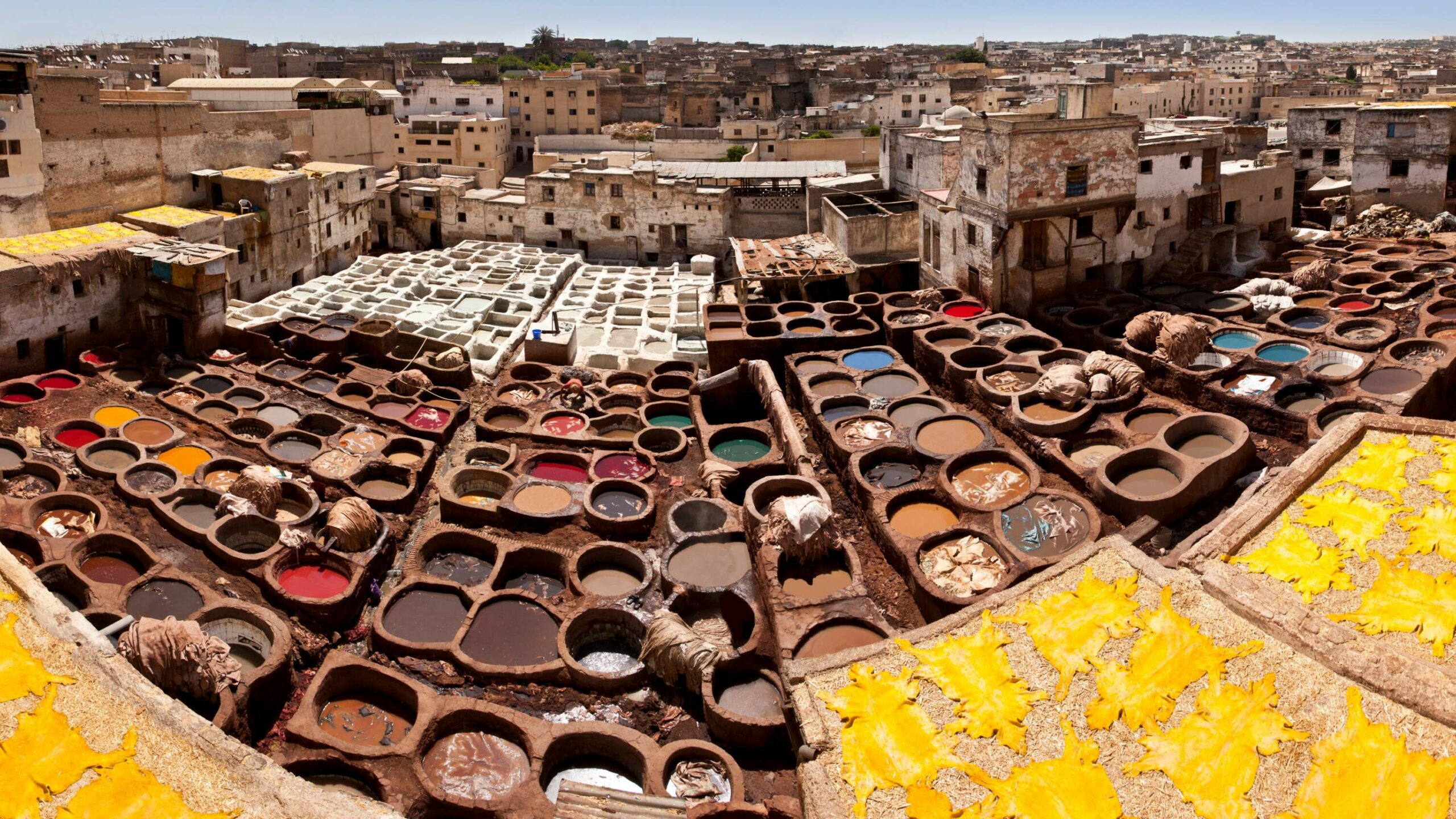
The most famous of these historic sites is Chouara Tannery, widely considered one of the oldest leather tanneries in the world. Established during the medieval period, the tannery is instantly recognizable for its large stone vats filled with vibrant natural dyes and workers carefully treating leather by hand. From surrounding terraces, visitors can overlook the colorful pits and observe artisans working exactly as their ancestors did hundreds of years ago.
What Makes the Tanneries Unique?
Unlike modern factories, the traditional tanneries of Fes rely almost entirely on manual labor and natural materials. The work begins early in the morning, as craftsmen prepare animal hides using a combination of water, salt, limestone, and natural softening agents. Every stage of the tanning process is performed by hand, requiring years of experience and physical endurance.
The tannery is divided into different sections, each dedicated to a specific part of the leather-making process. Some pits are used for cleaning and softening the hides, while others contain natural dyes that give Moroccan leather its famous colors. Large drying areas nearby allow the leather to cure naturally under the Moroccan sun before being transformed into handmade products.
Natural Dye Pits and Traditional Colors
One of the most striking features of Moroccan tanneries is the use of natural vegetable dyes. Artisans create vibrant colors using traditional ingredients sourced from nature. Saffron is used for yellow tones, indigo for blue, henna for orange, mint for green, and poppy flower for red shades. These natural dyes help give authentic Moroccan leather its rich appearance and unique texture.
The colorful pits create a spectacular visual scene that has become one of the most photographed artisan traditions in Morocco. Beyond their beauty, these dyeing techniques reflect centuries of ecological and sustainable craftsmanship that continue to define traditional Moroccan leather production.
The Artisans Behind Moroccan Leather
The heart of the tanneries is the artisans themselves. Many workers come from families that have practiced leather craftsmanship for generations. Their knowledge is not learned from books or machines but through years of hands-on experience inside the tannery.
Despite the rise of industrial manufacturing, these craftsmen continue to preserve one of Morocco’s oldest artisan traditions. Their dedication ensures that every handmade Moroccan leather product carries the authenticity, heritage, and human touch that make Moroccan leather famous around the world.
Step-by-Step: How Moroccan Leather Is Made
The traditional process of making Moroccan leather in Fes is a remarkable blend of craftsmanship, patience, and centuries-old knowledge. Unlike industrial leather production, every stage is completed by hand using natural ingredients and traditional techniques. From raw animal hides to beautifully finished leather goods, the process can take several weeks and requires the expertise of highly skilled artisans.
Step 1: Collecting and Preparing the Raw Hides
The process begins with raw animal hides, usually sourced from goats, cows, sheep, or camels. These hides are carefully cleaned to remove dirt, hair, and excess fat before entering the tanning pits. Moroccan artisans traditionally use salt and water during the first stage to help preserve the hides and prepare them for softening.
At this point, the leather still feels rough and stiff. Proper preparation is essential to ensure the material becomes soft, flexible, and durable during the following stages of tanning.
Step 2: Softening the Leather Naturally
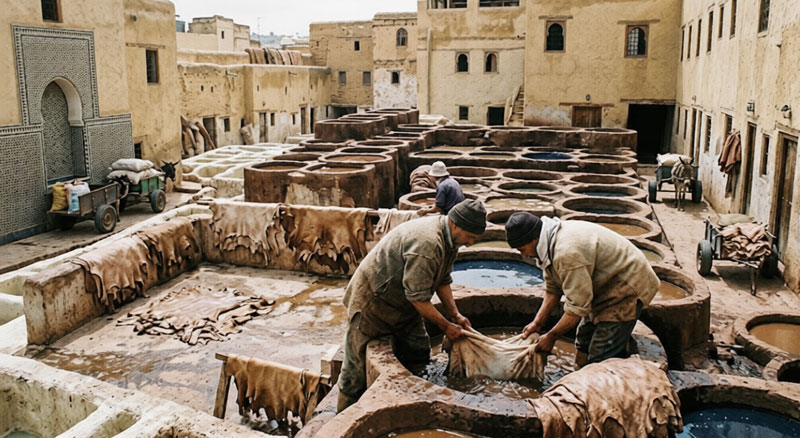
Once cleaned, the hides are placed into large stone vats filled with natural softening mixtures. Traditional tanneries in Fes often use limestone, water, and other natural compounds to break down the fibers and soften the leather.
This stage requires careful manual work, as artisans continuously move and press the hides by hand to ensure even treatment. The softening process is one of the key reasons why authentic Moroccan leather is known for its smooth texture and flexibility.
Step 3: Vegetable Tanning Using Natural Ingredients
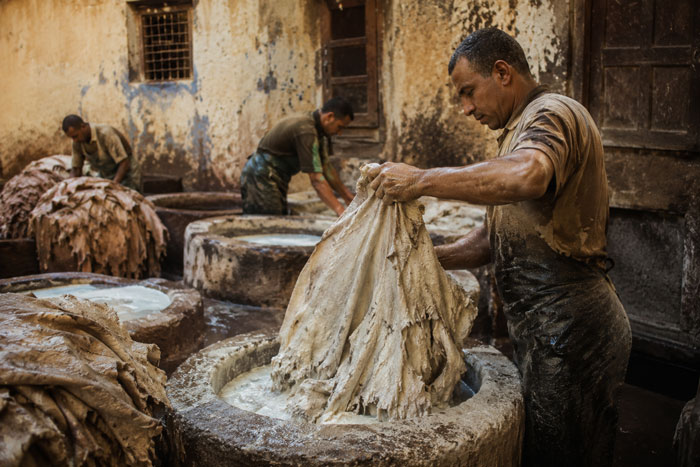
After softening, the leather enters the vegetable tanning stage, one of the most important parts of traditional Moroccan leather production. Instead of industrial chemicals, artisans rely on natural plant-based ingredients to preserve and strengthen the leather.
Natural substances such as mimosa bark, henna, saffron, cedar wood, mint, and other botanical materials are used to create eco-friendly tanning solutions. This traditional vegetable tanning method not only protects the leather naturally but also gives it a rich organic appearance and unique character.
The use of vegetable tanning is one of the reasons Moroccan leather is highly valued by people looking for sustainable and handmade artisan products.
Step 4: Dyeing the Leather by Hand
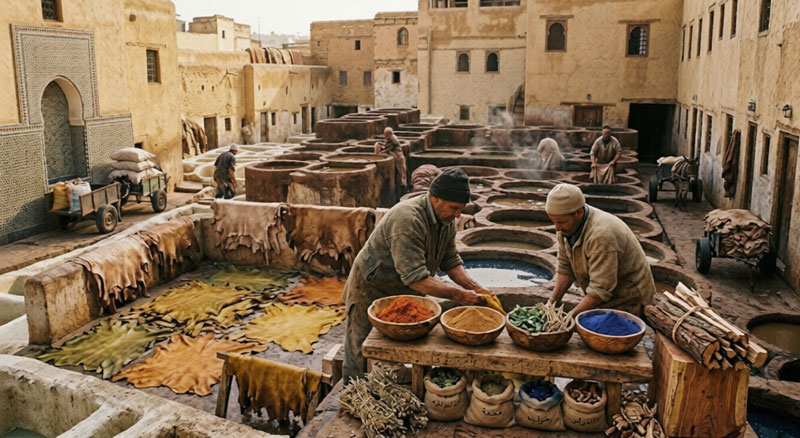
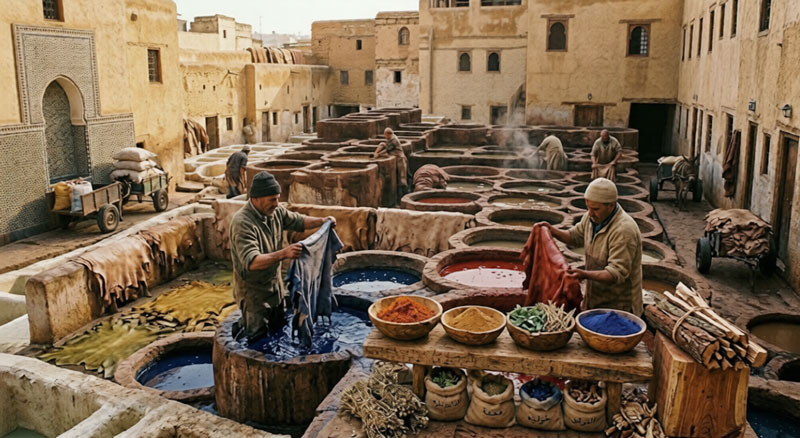
Once the tanning process is complete, artisans begin dyeing the leather using traditional natural pigments. The famous colorful pits inside Chouara Tannery are filled with handcrafted dyes made from natural ingredients.
Each color has its own traditional source:
- Saffron creates bright yellow tones
- Indigo produces deep blue shades
- Henna gives orange and earthy colors
- Poppy flower creates red tones
- Mint produces green shades
The hides are soaked, turned, and treated manually until the colors fully penetrate the leather. This technique creates the vibrant appearance that makes Moroccan leather products instantly recognizable.
Step 5: Drying the Leather Under the Sun
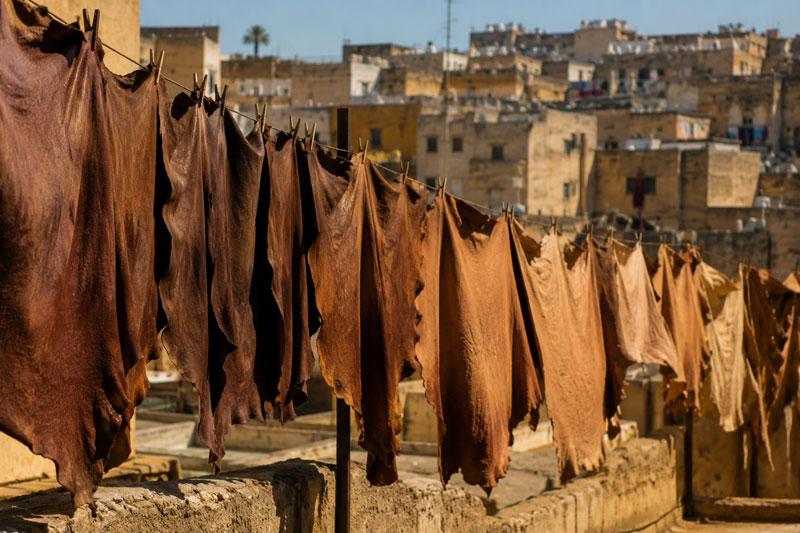
After dyeing, the leather is carefully stretched and left to dry naturally under the Moroccan sun. The warm climate of Fes helps artisans cure the leather slowly while preserving its softness and durability.
Rows of drying leather hanging above the medina create one of the most iconic scenes associated with traditional Moroccan craftsmanship. Sun drying also enhances the natural texture and authentic finish of handmade Moroccan leather.
Step 6: Crafting Handmade Moroccan Leather Products
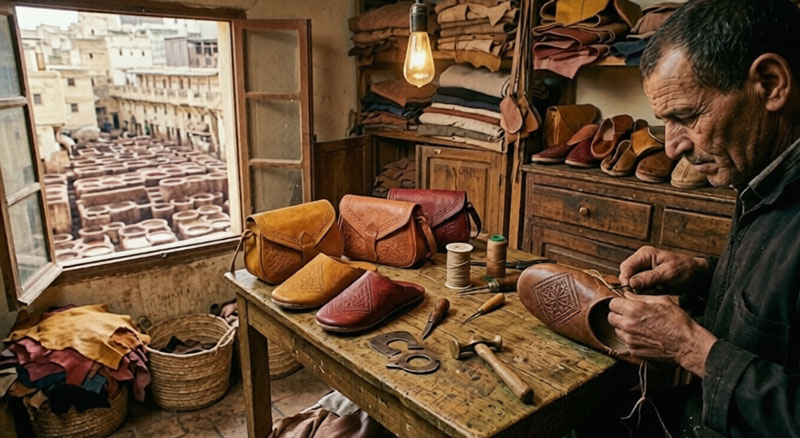
Once fully dried, the leather is delivered to artisan workshops where skilled craftsmen transform it into finished products. Using traditional hand-cutting and stitching techniques, artisans create a wide variety of handmade leather goods, including:
- Moroccan leather bags
- Traditional babouche slippers
- Leather poufs
- Wallets and belts
- Travel bags and accessories
- Handmade jackets and decorative items
Every finished piece reflects the skill, patience, and heritage of Moroccan artisan craftsmanship. No two handmade items are exactly alike, which adds to the authenticity and value of Moroccan leather products.
The Difference Between Moroccan Leather and Industrial Leather
In today’s market, many leather products are mass-produced using industrial methods and synthetic chemicals. However, traditional Moroccan leather from Fes remains unique because of its handmade quality, natural tanning process, and deep cultural heritage. Understanding the difference between authentic Moroccan leather and industrial leather helps explain why handmade Moroccan products are valued around the world.
Handmade Craftsmanship vs Machine Production
One of the biggest differences is the level of craftsmanship involved. Moroccan leather is traditionally made entirely by hand, from the tanning process to the final stitching of bags, slippers, belts, and accessories. Skilled artisans spend years mastering techniques that have been passed down through generations.
Industrial leather, on the other hand, is usually produced by machines in large factories designed for speed and mass production. While factory-made products may appear uniform, they often lack the individuality, detail, and artisanal character found in handmade Moroccan leather goods.
Natural Vegetable Tanning vs Chemical Processing
Traditional Moroccan leather is famous for its vegetable tanning methods that use natural ingredients such as saffron, henna, mint, and plant-based extracts. These eco-friendly techniques preserve the leather naturally while giving it rich colors and organic textures.
In contrast, industrial leather is commonly processed with synthetic chemicals, including chromium and artificial dyes. These methods allow factories to produce leather faster and at lower cost, but they can reduce the natural feel and authenticity of the material.
Vegetable-tanned Moroccan leather often develops a beautiful patina over time, making each item even more unique as it ages.
Unique Character and Natural Imperfections
Authentic Moroccan leather products are not designed to look perfectly identical. Small variations in texture, tone, and stitching are part of what makes handmade leather special. These natural imperfections reflect the human craftsmanship behind each piece and add to its authenticity.
Industrial leather products are generally standardized and uniform because they are machine-made. Although this creates consistency, it often removes the personality and artisanal touch that collectors and travelers appreciate in handmade Moroccan leather.
Sustainability and Traditional Production
Traditional leather workshops in Fes continue to rely heavily on manual labor, natural dyes, and centuries-old techniques rather than industrial machinery. This approach supports local artisan communities and helps preserve one of Morocco’s oldest crafts.
Because vegetable tanning uses fewer synthetic chemicals, traditional Moroccan leather production is also considered more environmentally friendly than many industrial leather manufacturing systems.
Why Authentic Moroccan Leather Stands Out
For many people, Moroccan leather represents more than just a product. It reflects history, craftsmanship, culture, and sustainability. Whether it is a handmade leather bag, a traditional pair of babouche slippers, or a decorative leather pouf, each item carries the story of the artisans who created it.
This combination of authenticity, durability, and artisanal beauty is what continues to make Moroccan leather highly respected and sought after around the world.
Best Moroccan Leather Products to Buy in Fes
Visiting Fes is not complete without exploring its famous handmade leather products. Thanks to centuries of artisan tradition and high-quality vegetable-tanned leather, Fes has become one of the best places in Morocco to shop for authentic handcrafted goods. From stylish fashion accessories to decorative home pieces, Moroccan leather products combine functionality, durability, and timeless craftsmanship.
Here are some of the most popular handmade Moroccan leather items worth buying during your visit to Fes.
Moroccan Leather Bags
Handmade Moroccan leather bags are among the most sought-after artisan products in Morocco. Available in many styles, including crossbody bags, backpacks, handbags, and travel bags, these pieces are known for their soft texture, durability, and elegant handcrafted details.
Artisans often create each bag using traditional hand-cutting and stitching techniques, giving every piece a unique appearance. Natural leather tones such as tan, brown, camel, black, and deep red are especially popular among travelers looking for authentic Moroccan craftsmanship.

Traditional Babouche Slippers
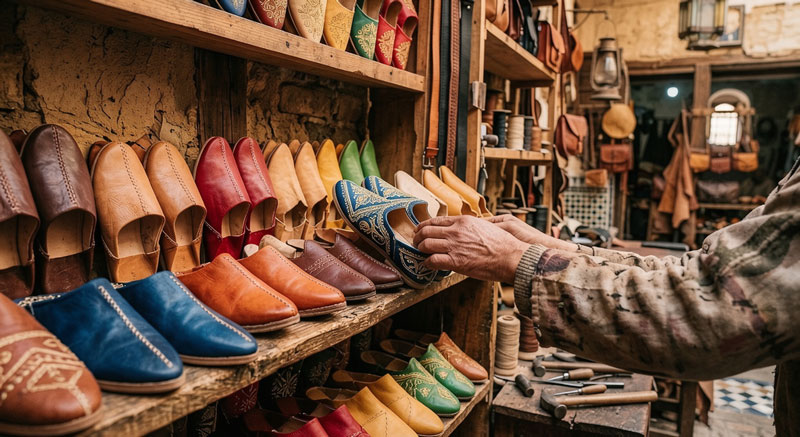
Babouches are traditional Moroccan leather slippers that have become famous around the world for their comfort and timeless design. Handmade from soft leather, these slippers are available in simple natural finishes as well as colorful embroidered styles.
In the souks of Fes, visitors can find babouches for men, women, and children in a wide variety of traditional and modern designs. Authentic handmade babouches are lightweight, flexible, and ideal as both practical footwear and cultural souvenirs.
Moroccan Leather Poufs
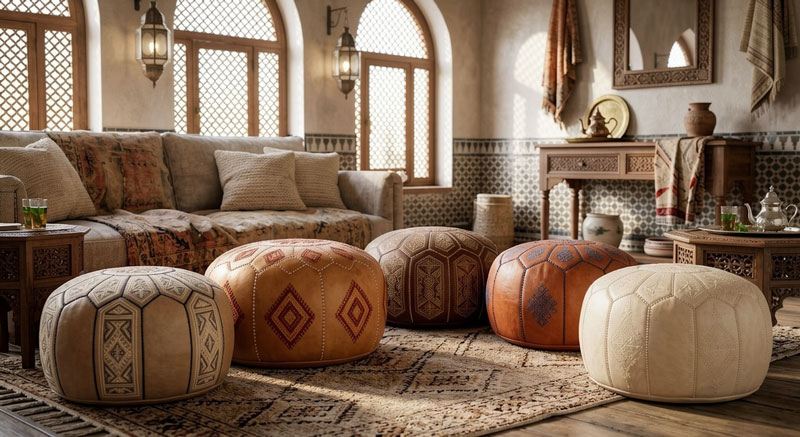
Leather poufs are one of the most iconic decorative products made in Morocco. These handmade cushions are crafted from stitched leather panels and are often used as footrests, seating, or decorative pieces in living rooms and bedrooms.
Moroccan leather poufs are especially popular in interior design because they add warmth, texture, and artisan character to modern and traditional spaces alike. Many are hand-embroidered with beautiful geometric patterns inspired by Moroccan design traditions.
Wallets, Belts, and Small Accessories
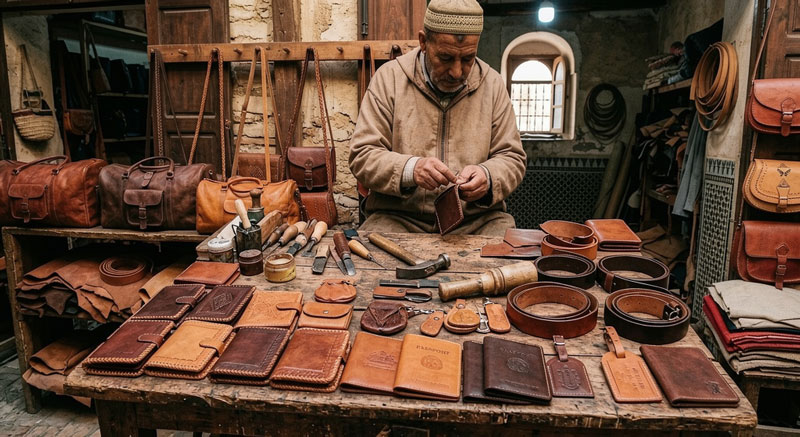
For visitors looking for practical handmade items, Moroccan artisans also create beautiful leather wallets, belts, passport holders, keychains, and card holders. These smaller accessories are excellent souvenirs because they are lightweight, durable, and easy to travel with.
Many workshops in Fes offer handcrafted accessories made from vegetable-tanned leather using traditional techniques that preserve the natural beauty of the material.
Handmade Travel Bags and Backpacks
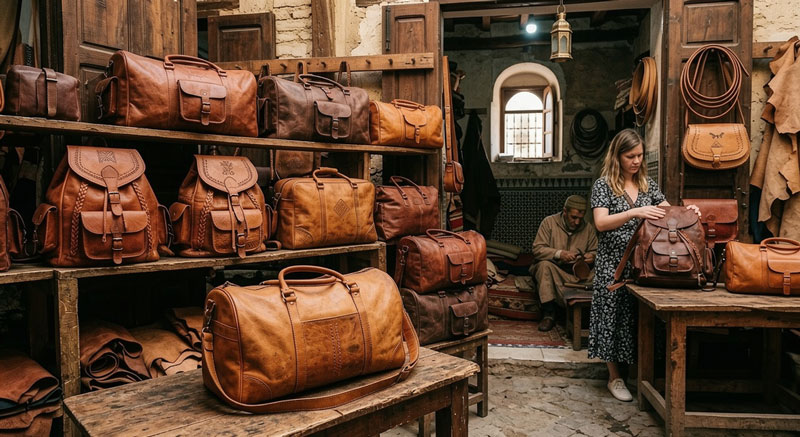
Moroccan leather travel bags are admired for their durability and vintage appearance. Whether used as weekend bags, carry-ons, or everyday backpacks, these handcrafted products are designed to age beautifully over time.
Their combination of practicality and artisanal style makes them especially attractive to travelers who appreciate authentic handmade craftsmanship.
Why Buying Directly From Artisans Matters
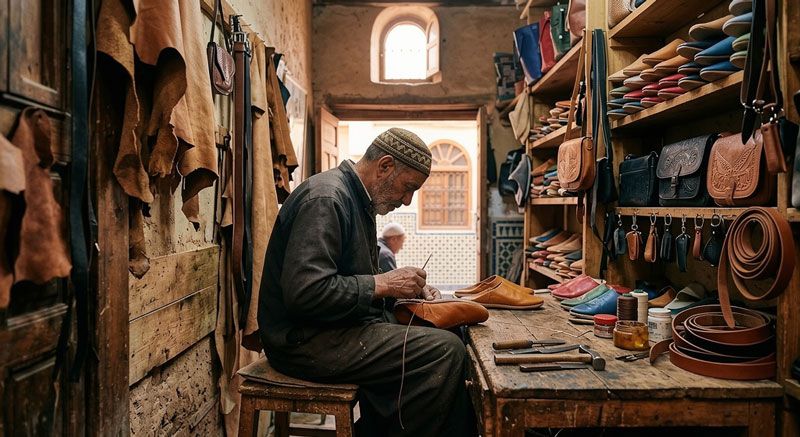
Shopping directly from artisan workshops in Fes helps support local craftsmen and preserve traditional Moroccan leather-making techniques. Unlike factory-made souvenirs, handmade Moroccan leather products carry genuine cultural value and reflect generations of artisan expertise.
When buying leather goods in Fes, visitors often have the opportunity to watch artisans at work, learn about the tanning process, and discover the story behind each handmade piece. This connection between craftsmanship and culture is what makes Moroccan leather products truly special.
How to Identify Authentic Moroccan Leather
With so many leather products available in markets and online shops, knowing how to identify authentic Moroccan leather can help you choose high-quality handmade pieces that truly reflect Moroccan craftsmanship. Genuine Moroccan leather from Fes is valued for its natural texture, durability, and traditional vegetable tanning methods. Unlike synthetic or factory-made products, authentic handmade leather carries unique characteristics that make every piece special.
Here are some important signs to help you recognize real Moroccan leather.
Look for Natural Texture and Imperfections
Authentic Moroccan leather is handmade, which means no two pieces are perfectly identical. Small variations in texture, stitching, and color are normal and often indicate genuine artisan craftsmanship.
Factory-made leather products usually appear extremely smooth and uniform because they are machine-produced. Handmade Moroccan leather, on the other hand, often has subtle marks and natural grain patterns that reflect the authenticity of the material.
Pay Attention to the Smell
One of the easiest ways to recognize real Moroccan leather is by its natural smell. Vegetable-tanned leather from traditional tanneries has a rich earthy scent that comes from natural oils, dyes, and tanning ingredients.
Because Moroccan artisans use natural substances such as saffron, henna, mint, and plant-based treatments, authentic leather often smells different from industrial leather processed with strong chemicals or synthetic materials.
Examine the Stitching and Craftsmanship
Handmade Moroccan leather products usually feature detailed hand stitching and carefully finished edges. Artisans spend time shaping, cutting, and sewing each item individually, which gives the final product a more authentic and durable construction.
When inspecting leather bags, wallets, belts, or babouches, look closely at the craftsmanship. High-quality handmade leather goods generally feel sturdy, balanced, and well-finished without appearing overly manufactured.
Check the Flexibility and Softness
Traditional Moroccan leather is known for being soft, flexible, and comfortable. Vegetable tanning helps preserve the natural quality of the leather while keeping it durable over time.
Authentic Moroccan leather products should feel smooth and supple rather than stiff or plastic-like. The material often becomes even softer and more beautiful as it ages.
Observe the Color and Dye Quality
Moroccan leather artisans traditionally use natural dyes to create rich colors inspired by Moroccan culture and nature. Earthy browns, camel tones, deep reds, mustard yellows, and indigo blues are commonly found in handmade leather products.
Unlike synthetic coatings used in industrial manufacturing, natural dyeing allows the leather to maintain depth, texture, and slight tonal variations that enhance its handmade appearance.
Buy From Trusted Artisan Workshops
One of the best ways to ensure authenticity is to purchase directly from artisan workshops and reputable leather stores in Fes. Many traditional workshops allow visitors to observe the leather-making process and learn more about the craftsmanship behind each product.
Buying directly from local artisans not only guarantees higher authenticity but also helps support traditional Moroccan craftsmanship and preserve centuries-old tanning traditions.
Why Authentic Moroccan Leather Is Worth It
Authentic Moroccan leather products are more than simple souvenirs. They represent history, culture, and artisan expertise developed over generations. Whether you choose a handmade bag, leather pouf, babouche slippers, or travel accessory, genuine Moroccan leather offers durability, timeless style, and a unique handcrafted character that mass-produced products cannot replicate.
Visiting a Leather Tannery in Fes: What to Expect
A visit to the traditional leather tanneries of Fes is one of the most unforgettable cultural experiences in Morocco. Hidden inside the ancient medina, these historic workshops offer visitors a rare opportunity to witness centuries-old artisan traditions still practiced by hand today. From the colorful dye pits to the busy artisan workshops, exploring the tanneries provides a fascinating behind-the-scenes look at how authentic Moroccan leather is made.
Discovering the Famous Chouara Tannery
The most well-known tannery in Fes is Chouara Tannery, one of the oldest operating leather tanneries in the world. As you walk through the narrow streets of the medina, you’ll eventually arrive at viewing terraces overlooking the famous stone dye pits filled with vibrant natural colors.
From above, visitors can watch artisans carefully treating leather hides by hand using traditional tanning and dyeing methods that have remained largely unchanged for centuries. The scene is both visually impressive and culturally significant, offering a glimpse into Morocco’s rich artisan heritage.
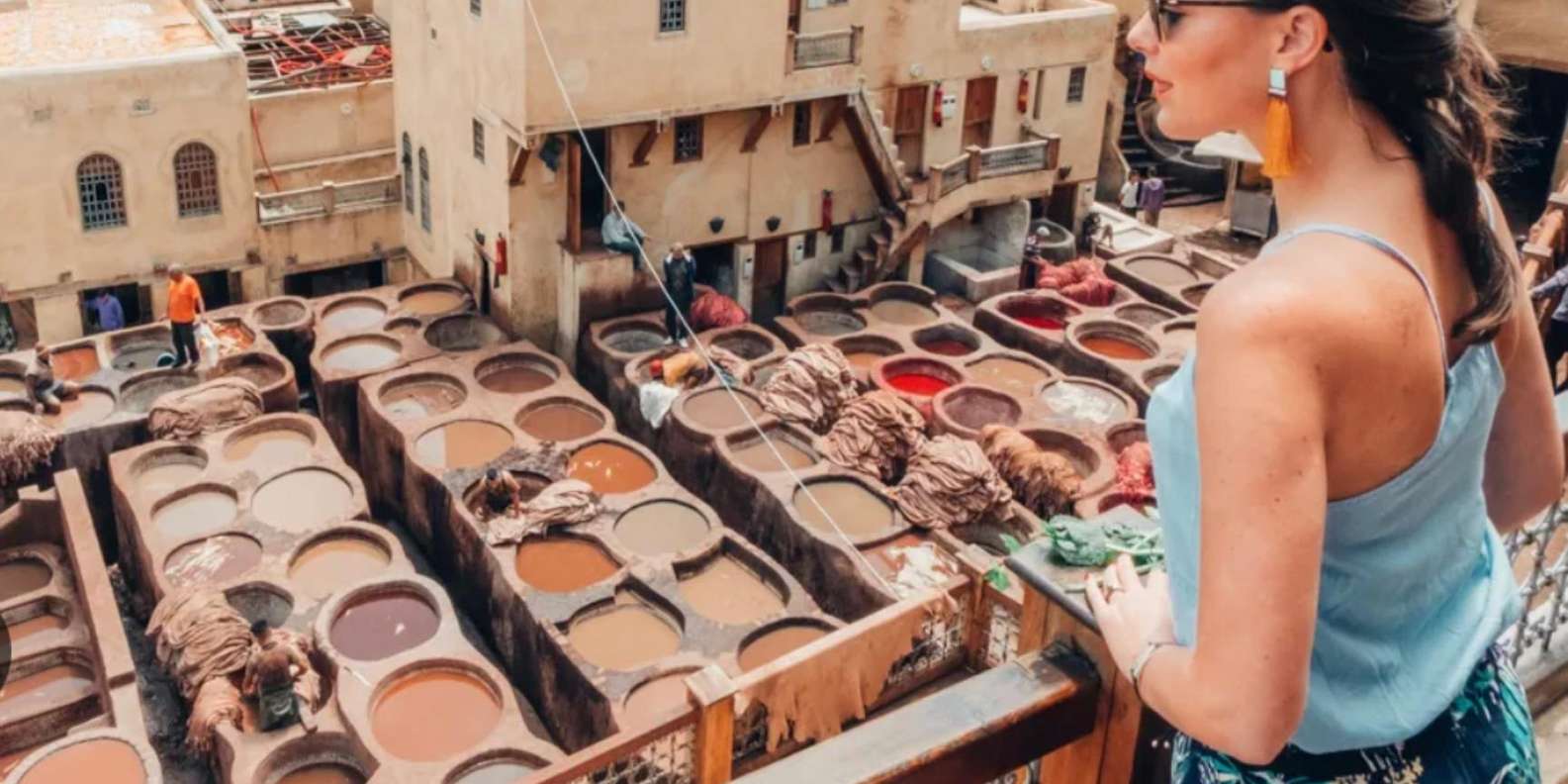
The Unique Atmosphere of the Tanneries
The tanneries are lively, colorful, and full of activity. Workers move between large stone vats, carrying leather hides, preparing natural dyes, and drying freshly treated leather under the sun. The atmosphere reflects the hard work and craftsmanship involved in producing handmade Moroccan leather products.
Because the tanning process uses natural ingredients, visitors often notice the strong earthy smell of the tannery. Many local guides and shop owners traditionally offer fresh mint leaves to help soften the scent while exploring the area.
Best Time to Visit
The best time to visit the leather tanneries in Fes is usually during the morning or early afternoon when artisans are actively working and the natural sunlight illuminates the colorful dye pits. Visiting on a clear day also provides better opportunities for photography and panoramic views from the terraces.
Spring and autumn are especially comfortable seasons for exploring the medina and artisan districts due to the mild temperatures.
Photography Tips for Visitors
The tanneries are considered one of the most photogenic places in Morocco. Visitors can capture incredible images of the colorful pits, traditional architecture, and artisans working by hand.
For the best photos:
- Visit during daylight hours for natural lighting
- Use elevated terraces for panoramic views
- Focus on textures, colors, and craftsmanship details
- Respect artisans and ask permission before close-up portraits
The combination of ancient architecture, natural dyes, and traditional labor creates a truly unique visual atmosphere.
Shopping for Authentic Moroccan Leather
Most tannery terraces are connected to artisan leather shops where visitors can purchase handmade products directly from local craftsmen. Common items include:
- Leather bags
- Babouche slippers
- Wallets and belts
- Leather jackets
- Poufs and home décor accessories
Buying directly from artisan workshops allows travelers to support local craftsmanship while taking home authentic Moroccan leather products made using traditional methods.
A Cultural Experience Beyond Shopping
Visiting the tanneries is not only about buying leather goods. It is also an opportunity to understand the history, craftsmanship, and cultural importance of Moroccan artisan traditions. The experience connects visitors to centuries of handmade production techniques that continue to shape the identity of Fes today.
For many travelers, exploring the leather tanneries becomes one of the most memorable highlights of visiting Morocco.
Supporting Local Artisans and Sustainable Craftsmanship
Behind every handmade Moroccan leather product is the skill, patience, and dedication of local artisans who continue to preserve one of Morocco’s oldest traditional crafts. In Fes, leather craftsmanship is more than a profession, it is a cultural heritage passed down through generations. Supporting these artisans helps protect traditional knowledge while encouraging sustainable and ethical handmade production.
Preserving Centuries-Old Artisan Traditions
The traditional leather-making techniques used in Fes have survived for hundreds of years because of artisan families who continue teaching these skills to younger generations. From tanning and dyeing to stitching and finishing, every step requires experience and craftsmanship that cannot easily be replaced by machines.
As industrial manufacturing grows around the world, traditional handmade crafts face increasing challenges. Choosing authentic Moroccan leather products helps keep these ancient techniques alive and supports workshops that rely on artisanal production rather than mass manufacturing.
Why Handmade Moroccan Leather Is More Sustainable
Traditional Moroccan leather production is often considered more environmentally friendly than large-scale industrial leather manufacturing. Many artisan tanneries still use natural vegetable tanning methods and plant-based dyes instead of relying heavily on synthetic chemicals.
The production process also depends largely on manual labor and simple traditional tools rather than energy-intensive machinery. This slower and more natural approach reduces industrial waste while maintaining the authenticity and quality of the leather.
Because handmade Moroccan leather products are designed to last for many years, they also encourage more sustainable consumption compared to disposable fast-fashion accessories.
Supporting Local Families and Artisan Communities
When travelers buy directly from artisan workshops in Fes, they contribute directly to local families and small businesses that depend on traditional craftsmanship for their livelihood. Every handmade leather bag, wallet, babouche, or pouf represents hours of skilled work completed by local craftsmen.
Supporting artisan workshops helps:
- Preserve cultural heritage
- Sustain local employment
- Encourage fair handmade production
- Protect traditional Moroccan craftsmanship
- Promote ethical tourism experiences
This connection between visitors and artisans creates a more meaningful travel experience while strengthening local communities.
The Value of Authentic Handmade Products
In a world filled with factory-made goods, handmade Moroccan leather products stand out because they carry individuality and human craftsmanship. Small imperfections, natural textures, and detailed hand stitching make each piece unique.
Authentic handmade products also tell a story. They reflect the traditions, culture, and artistic identity of Morocco while preserving techniques that have shaped the history of Fes for centuries.
Responsible and Ethical Shopping Tips
When shopping for Moroccan leather products, visitors can support ethical craftsmanship by:
- Buying directly from artisan workshops
- Choosing handmade vegetable-tanned leather
- Asking about the production process
- Avoiding mass-produced imitation products
- Appreciating the time and labor behind each item
Responsible shopping helps ensure that traditional leather craftsmanship continues to thrive for future generations.
By supporting local artisans in Fes, travelers not only purchase beautiful handmade products but also become part of the effort to preserve one of Morocco’s most important cultural traditions.
Conclusion:
The traditional leather tanneries of Fes offer much more than a glimpse into handmade craftsmanship — they reveal a living tradition that has shaped Moroccan culture for centuries. From preparing raw hides and vegetable tanning to hand dyeing and crafting beautiful finished products, every stage of the process reflects the dedication, skill, and heritage of Moroccan artisans.
What makes Moroccan leather truly special is the combination of natural materials, ancestral techniques, and authentic handmade artistry. Unlike mass-produced industrial leather, traditional Moroccan leather carries character, history, and individuality in every piece. Whether it’s a handcrafted leather bag, a pair of traditional babouche slippers, or a decorative leather pouf, each item represents generations of craftsmanship preserved inside the ancient medina of Fes.
Visiting the famous tanneries and artisan workshops allows travelers to connect directly with this remarkable cultural heritage. It is an opportunity to witness centuries-old techniques still practiced by hand, support local artisan communities, and appreciate the beauty of sustainable handmade production.
As the world continues to move toward fast manufacturing and factory-made goods, Moroccan leather remains a symbol of authenticity, durability, and timeless artisan quality. For travelers, designers, and lovers of handmade craftsmanship, discovering the traditional tanning process in Fes is an unforgettable experience and a true celebration of Moroccan heritage.
If you ever visit Fes, take the time to explore the leather tanneries, meet the artisans, and discover the incredible story behind authentic Moroccan leather.