
Fes Chouara Tannery Scams | What You Should Know Before Visiting
The Truth Behind the Fes Tannery Experience
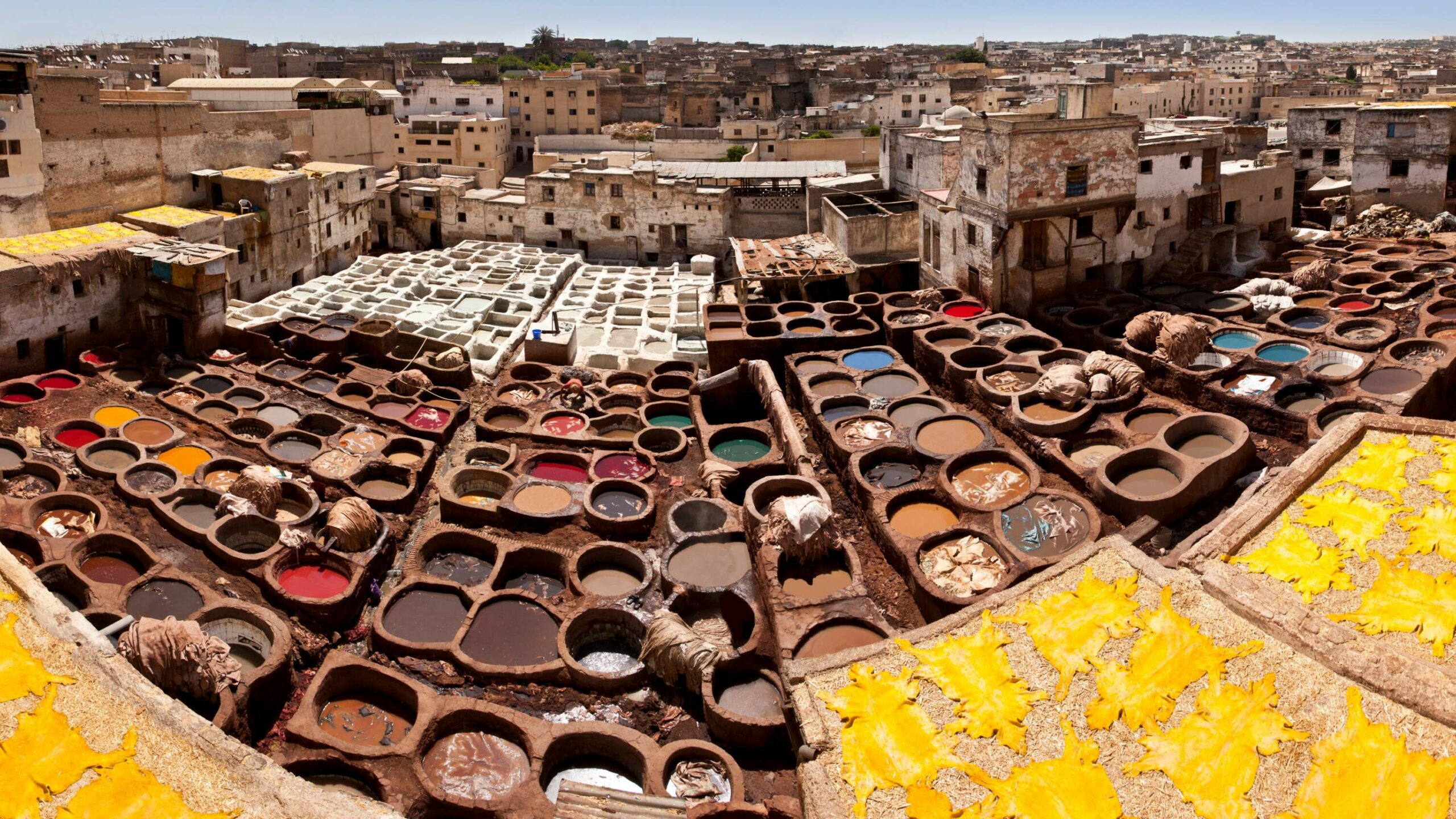
Few places in Morocco attract as much curiosity, and confusion, as the famous leather tanneries of Fes. Hidden deep inside the winding alleys of the medina lies the iconic Chouara Tannery, where leather has been processed using centuries-old techniques that still rely on natural dyes, stone vats, and manual craftsmanship.
For many visitors, the experience starts with excitement: colorful dye pits, panoramic rooftop views, and the promise of authentic Moroccan leather. But very quickly, something else enters the picture: persistent “guides,” unexpected detours into shops, confusing pricing, and pressure to buy. This is where many travelers start wondering the same thing: “Is this a cultural experience… or a scam?”
The reality is more nuanced. The tannery itself is not a scam; it is a real working craft site and one of the most photogenic places in Morocco. However, the system surrounding it has evolved in a way that can easily mislead tourists who are unfamiliar with how the medina economy works.
In this guide, we’ll break down exactly what happens around the Fes tanneries, expose the most common tactics visitors encounter, and show you how to experience this landmark safely, confidently, and without unnecessary pressure.
Why the Fes Tanneries Attract Tourist Scams
The area around the Chouara Tannery is one of the most visited spots in the entire Fes medina, and that popularity is exactly what creates the conditions for confusion and tourist scams.
First, the medina itself is a maze. Narrow alleys, identical-looking streets, and limited signage make it extremely easy for visitors to get lost. This dependence on navigation naturally opens the door for unsolicited “helpers” who appear just at the right moment, offering to guide you to the tannery.
Second, there is no fixed pricing system in many surrounding businesses. From rooftop access to leather shops, prices are often flexible, or inflated depending on how tourists arrive. This lack of transparency creates a gray zone where visitors may not realize they are paying far above local rates.
Third, the experience is highly emotional. The moment you step onto a rooftop and see the vibrant dye pits below, you’re in a sensory overload of colors, smells, and craftsmanship. In that moment, decision-making becomes more impulsive, and that’s exactly when pressure-based selling is most effective.
Finally, many “guides” operate on commission. Instead of simply helping you reach the tannery, they are often incentivized to bring you into specific shops afterward. This creates a chain: guide → shop → commission, which can blur the line between genuine hospitality and sales-driven interaction.
None of this means the experience is unsafe, but it does mean that understanding how the system works is essential if you want to enjoy the tannery without feeling misled.
The Most Common Fes Tannery Scams Explained
Most visitors don’t get “scammed” in a dramatic way; they get slowly guided into situations where prices, intentions, or expectations are unclear. Around the Chouara Tannery, these patterns repeat so often that they’ve become part of the tourist experience itself.
1. The “Free Guide” Trap
This is the most common entry point. Someone approaches you in the medina offering help to “find the tannery” or “show you the real entrance.” At first, it feels like friendly assistance.
The catch comes later. Once they’ve guided you through the maze, they may expect a tip far higher than expected, or subtly redirect you toward shops where they earn commission. What starts as free help becomes an unspoken transaction.
2. Fake Official Guides
Some individuals present themselves as licensed or “official” guides, even when they are not. They may wear confident language, claim authority, or insist that you cannot enter without them.
The issue is not just the fee; it’s that the price is often negotiated on the spot, with unclear boundaries about what is included. This can lead to surprise charges after a short visit.
3. Overpriced Leather Shops
Many routes to the tannery include stops at leather shops claiming to sell products “direct from the tannery.” While the leather is often real, the pricing is frequently inflated for tourists.
These shops operate on a commission system: whoever brings you there earns a percentage. As a result, prices are adjusted to absorb that commission, making items significantly more expensive than in less tourist-driven parts of the medina.
4. Misleading Leather Quality Claims
You’ll often hear phrases like “100% pure camel leather,” “traditional untouched leather,” or “highest-grade handmade quality.” While Moroccan leather craftsmanship is genuine, these labels are not always precise.
In reality, some products may be mixed, treated, or finished differently than implied. The issue isn’t that the leather is fake; it’s that marketing language is designed to sound more exclusive than it really is.
5. Rooftop Access Fees
Some shops near the tannery charge an unofficial “entry fee” to access rooftop terraces with views of the dye pits. In many cases, access is technically free if you enter through different routes, but tourists are rarely told this.
The expectation is often indirect: once you’re on the rooftop, you feel pressured to browse or purchase items in return for the view.
What Is Real vs What Is a Scam in Fes Tanneries
One of the biggest misunderstandings about the experience around the Chouara Tannery is assuming everything connected to it is either fully authentic or completely fake. The reality sits somewhere in between.
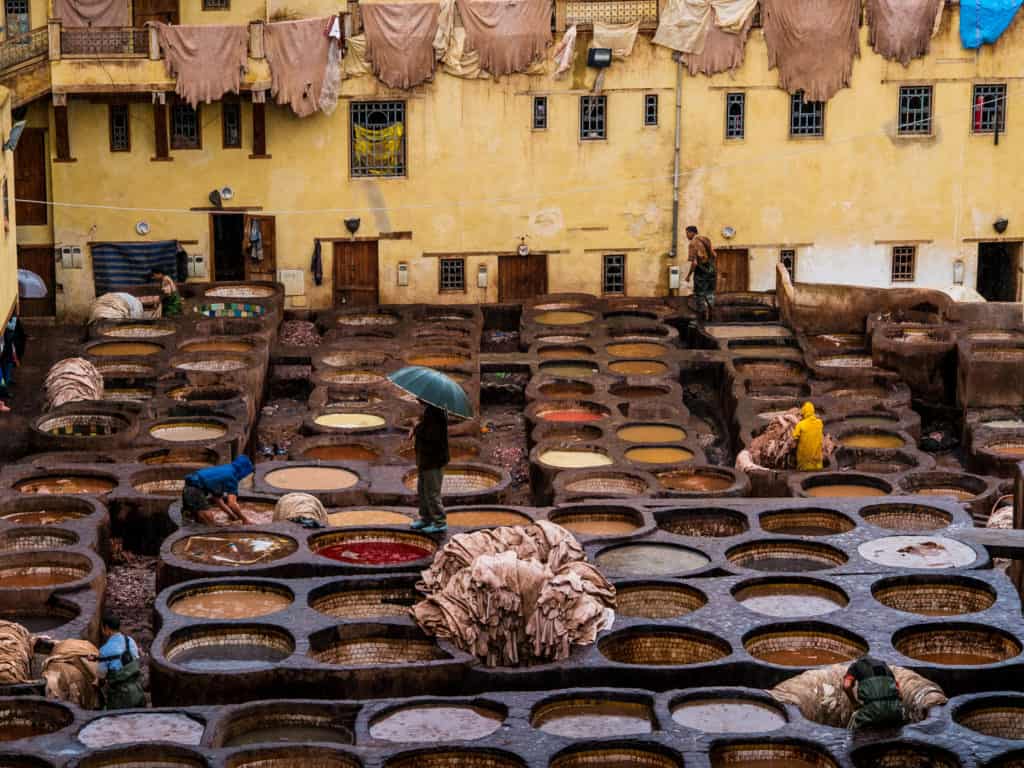
The tannery itself is absolutely real. The dye pits, the workers, the natural materials, and the centuries-old methods are all part of a living craft tradition that has existed in Fes for generations. This is not staged for tourists; it is still a functioning leather production site.
What isn’t always transparent is the ecosystem built around it. The “scam” feeling usually comes from how visitors are moved through the experience: guided through narrow streets, directed toward specific rooftops, and then funneled into shops that operate on commission-based relationships. In this system, the product is real, but the path to it is optimized for sales rather than clarity.
Another important distinction is pricing. You are not necessarily being charged for fake goods, you are often paying a “tourist premium.” That includes guide commissions, shop overhead, and location markup. The leather may be genuine, but the price is shaped by the route you took to get there.
So the key difference is simple: the craftsmanship is authentic, but parts of the experience are commercialized in ways that can feel misleading if you are not aware of the structure behind it.
Understanding this balance helps remove the frustration many visitors feel. Instead of seeing everything as a scam, you begin to see a layered system where culture, tourism, and commerce overlap, and where awareness gives you control over your experience.
How to Visit the Fes Tanneries Safely (Step-by-Step Guide)
Visiting the Chouara Tannery can be an unforgettable experience if you approach it with a clear plan. The goal is not to avoid people or the culture, but to avoid confusion, pressure, and unnecessary costs while still enjoying the site fully.
Option 1: Go Without a Guide (Independent Visit)
This is the most budget-friendly option, but it requires confidence navigating the medina.
- Use offline maps before entering the old city of Fes
- Ask for directions only from clearly official sources (hotel, riad staff, or verified shop owners)
- Politely decline “guides” with a simple: “No thank you, I know the way.”
- Expect to get slightly lost, this is normal in the medina, not a problem
This option gives you full control, but you may need patience to find the right entrance.
Option 2: Use an Official Licensed Guide
If you prefer structure and clarity, hiring a licensed guide is often the safest experience.
- Book through your riad, hotel, or official tourism office
- Confirm the total price before starting the tour
- Ask clearly what is included (tannery visit, medina walk, shops or not)
- A good guide should explain history, not pressure purchases
This option reduces confusion significantly, especially for first-time visitors.
Option 3: Book a Trusted Workshop Experience
A growing number of ethical experiences combine the tannery visit with educational workshops and fixed pricing.
- Transparent pricing with no hidden stops
- Focus on craftsmanship and leather-making education
- Direct interaction with artisans rather than commission-based shops
- No pressure to buy at any stage
This is often the most relaxed and informative way to experience Fes leather culture.
General Safety Tips (Works for All Options)
- Avoid accepting help from strangers inside the medina
- Never agree to “quick free tours” without clear terms
- Ask prices before entering any rooftop or shop
- Walk away confidently if you feel pressured
With the right approach, your visit becomes less about avoiding scams and more about understanding how to move through the medina with confidence and awareness.
How to Avoid Getting Scammed (Practical Tips)
Most of the issues visitors face around the Chouara Tannery are avoidable once you understand how interactions in the Fes medina usually unfold. The key is not suspicion, it’s clarity and simple habits that keep you in control of your experience.
1. Don’t Accept Unsolicited “Help”
In the medina, strangers offering to “show you the tannery” is one of the most common entry points into commission-based tours. Even if it feels friendly, it often leads to indirect pressure later.
A simple, calm refusal works best:
“No thank you, I’m fine.”
Avoid long explanations, they tend to invite further persuasion.
2. Always Confirm Prices Before Anything Begins
Whether it’s a rooftop view, a guided walk, or a shop visit, always ask what it costs before you follow someone or enter a space.
- Rooftop access
- Guide services
- “Free” tours or explanations
If the price is unclear or delayed, treat it as a red flag.
3. Understand the Commission Chain
Many experiences in the area follow a hidden structure:
guide → rooftop → leather shop → commission
Nothing is necessarily fake, but pricing is often shaped by this chain. Knowing this helps you understand why certain places feel “recommended” even when you didn’t ask.
4. Stay Polite but Firm
In Fes, pressure is rarely aggressive, it’s persistent. The best strategy is calm repetition.
- “No, thank you”
- “We are just looking”
- “We will decide later”
You don’t need to justify your choices.
5. Don’t Buy Under Pressure
Leather products in Fes can be beautiful, but urgency is a tactic.
If you feel rushed:
- Leave the shop
- Compare elsewhere
- Return only if you still want it
Genuine sellers won’t prevent you from leaving.
6. Trust Your Timing, Not Theirs
Scams often rely on speed, quick turns, quick stops, quick decisions. Slow down your own pace.
If something feels rushed, it usually is.
How to Identify Real Moroccan Leather
One of the biggest concerns for visitors around the Chouara Tannery is not just price, it’s whether what they are buying is actually authentic Moroccan leather. While most products in Fes are indeed leather-based, quality and processing methods can vary significantly, especially in tourist-heavy shops.
Understanding a few simple signs can help you separate genuine craftsmanship from heavily marketed or lower-grade items.
1. The Smell Test (Most Reliable Clue)
Real Moroccan leather has a natural, earthy smell. It should feel organic rather than chemical.
- Authentic leather: natural, slightly strong but not “toxic”
- Low-quality or heavily treated leather: chemical, plastic-like, or overly perfumed
If a product smells like strong glue or perfume, it may be masking industrial processing.
2. The Touch Test
Touch is often more reliable than appearance.
- Genuine leather feels slightly uneven, soft, and warm
- Fake or synthetic materials feel too smooth, too perfect, or plastic-like
- Real leather adapts slightly to your hand heat
In Fes, you’ll often notice that handmade items are never perfectly uniform; that’s actually a good sign.
3. Natural Imperfections
Authentic leather carries subtle imperfections.
- Small variations in texture
- Slight color differences
- Irregular grain patterns
If everything looks identical and machine-perfect, it may be heavily processed or synthetic.
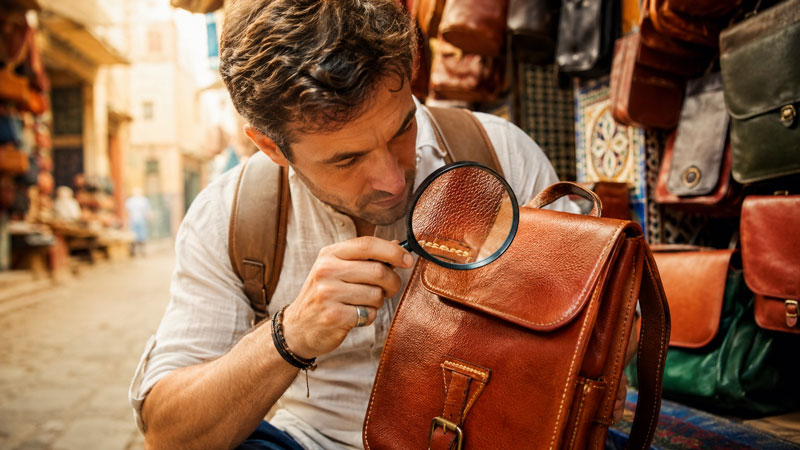
4. Stitching and Edges
Craftsmanship often shows up in the finishing details.
- Hand-stitched items may have minor inconsistencies
- Machine-perfect stitching is not automatically bad, but it often signals mass production
- Check edges: real leather edges are usually slightly rough or sealed, not plastic-smooth
5. Color Consistency Myth
A common misunderstanding is that bright colors mean lower quality. In reality, traditional dyeing methods at the Chouara Tannery produce very vibrant tones.
The key difference is not brightness, but whether the color looks layered and absorbed; or artificially coated on the surface.
Important Reality Check
Most “fake leather” claims are exaggerated. In Fes, the bigger issue is not synthetic products everywhere, but mixed quality levels and marketing exaggeration, especially in tourist-oriented shops.
Bottom Line
Real Moroccan leather is usually easy to recognize once you focus on:
- natural smell
- imperfect texture
- handcrafted feel
- honest finishing
When you combine these signs, you can confidently judge quality without relying on shop explanations or sales pressure.
Join a Real Leather Workshop in Fes
If you want to experience Moroccan leather beyond the crowds, pressure, and confusion around the Chouara Tannery, the best way is to step inside the craft itself.
At Fes Leather Workshop, you don’t just observe, you participate. You learn how leather is traditionally treated, understand the meaning behind each step of the process, and see how real artisans transform raw hides into handcrafted pieces using methods passed down through generations.
There are no hidden stops, no commission-driven shops, and no pressure to buy. Just a clear, guided experience focused on craftsmanship, culture, and authenticity.
Is the Fes Tannery Worth Visiting Despite the Scams?
After hearing about the pressure tactics, pricing confusion, and commission-based guides around the Chouara Tannery, it’s normal to wonder whether the visit is even worth it.
The short answer: yes, but only if you understand what you’re walking into.
On a purely visual level, the tannery is one of the most striking places in Morocco. The view from above, rows of stone vats filled with natural dyes, workers moving through centuries-old routines, and intense blocks of color under the sun, is something that feels almost surreal in person. No photo truly captures the scale or atmosphere of it.
What often disappoints travelers is not the tannery itself, but everything surrounding it: being rushed into shops, unclear pricing, and feeling like every interaction has a hidden cost. That experience can overshadow what is otherwise a fascinating cultural site.
But when you strip away the pressure, the tannery becomes something else entirely. It turns into a living demonstration of traditional craftsmanship that has survived modernization, industrial leather production, and tourism pressure. Watching it with the right expectations changes everything.
So the real question is not whether it’s a scam or not, it’s whether you can experience it on your own terms. If you go in aware of the system, move at your own pace, and don’t let the surrounding sales dynamics control your visit, it remains one of the most memorable stops in Fes.
In the end, the tannery is worth seeing not because it is perfect, but because it is real and complex.
FAQ – Fes Tannery Scams
Is the Fes tannery a scam?
No. The experience at the Chouara Tannery is not a scam in itself. It is a real working leather production site with centuries of tradition. What visitors often experience as “scams” are the surrounding systems: guides, shop commissions, and unclear pricing, not the tannery itself.
Do you need a guide to visit Chouara Tannery?
No, a guide is not required. You can reach it independently, but the Fes medina is complex and easy to get lost in. A licensed guide can help, but only if booked in advance with a clear fixed price.
Why do people warn about scams in the Fes medina?
Because many visitors encounter:
- unsolicited “helpers” offering guidance
- commission-based shop visits
- unclear pricing for rooftop access or tours
These are common structures in tourist-heavy areas, not isolated incidents.
Is leather in Fes real or fake?
Most leather sold in Fes is real animal leather. The main issue is not authenticity, but variation in quality and marketing exaggeration, especially in tourist-oriented shops.
How do I avoid getting overcharged?
- Always ask prices before entering shops or rooftops
- Compare at least 2–3 places before buying
- Avoid buying under pressure or urgency
- Prefer transparent workshops over guide-recommended stores
Can you visit the tannery for free?
Yes, in many cases you can view the tannery for free from rooftops attached to shops. However, some places may expect you to browse or purchase items afterward, so expectations should be clear before entering.
What is the safest way to experience the tannery?
The safest approach is:
- go with a licensed guide or trusted workshop experience
- confirm all prices in advance
- avoid accepting help from strangers inside the medina
- take your time and move at your own pace
What Every Tourist Should Remember
Visiting the Chouara Tannery is one of the most visually powerful experiences in Fes, but it also comes with a learning curve that catches many first-time visitors off guard.
The most important takeaway is simple: the tannery itself is authentic, but the experience around it is shaped by tourism dynamics, guides, commissions, and pricing variability. None of this makes the place less real, but it does mean you need awareness to fully enjoy it on your own terms.
Once you understand how things work, everything becomes easier. The “guides” become optional, the pressure loses its effect, and the medina becomes less of a maze and more of a place you can navigate with confidence.
What remains is the essence of the visit: centuries-old craftsmanship, striking visuals, and a living tradition that still defines part of Fes today. If you move slowly, ask questions, and don’t rush decisions, the experience shifts from stressful to genuinely memorable.
In the end, the best way to avoid scams in Fes is not avoidance, it’s understanding. And with that understanding, the tannery becomes not a problem to solve, but a story worth seeing for yourself.