
How to Spot Fake Moroccan Leather Before You Buy in Fes
Walking through the ancient medina of Fes, you’ll quickly notice that leather is everywhere. From handcrafted bags and wallets to colorful slippers and jackets, Moroccan leather is one of the city’s most sought-after souvenirs. Many visitors come specifically to see the famous Chouara Tannery and take home a piece of the centuries-old craftsmanship that has made Fes known as Morocco’s leather capital.
But not every product labeled “genuine leather” is what it claims to be.
As tourism has grown, some shops have started selling synthetic or low-quality materials that can be difficult for first-time buyers to identify. What looks like authentic Moroccan leather may actually be faux leather, bonded leather, or imported factory-made products that won’t last nearly as long as the real thing.
The good news? You don’t need to be a leather expert to spot the difference.
In this guide, we’ll show you the simple tests artisans use to identify genuine Moroccan leather, the warning signs of fake products, and the questions you should ask before making a purchase. Whether you’re shopping for a leather bag, wallet, belt, or jacket in Fes, these tips will help you buy with confidence and avoid costly mistakes.
Why Fes Is Famous for Leather
Long before modern factories existed, artisans in Fes were transforming animal hides into durable, beautiful leather goods using techniques passed down through generations. Today, the city remains the heart of Morocco’s leather industry, attracting travelers, designers, and craftspeople from around the world.
If you’re shopping for leather in Morocco, there’s no better place to start than Fes.
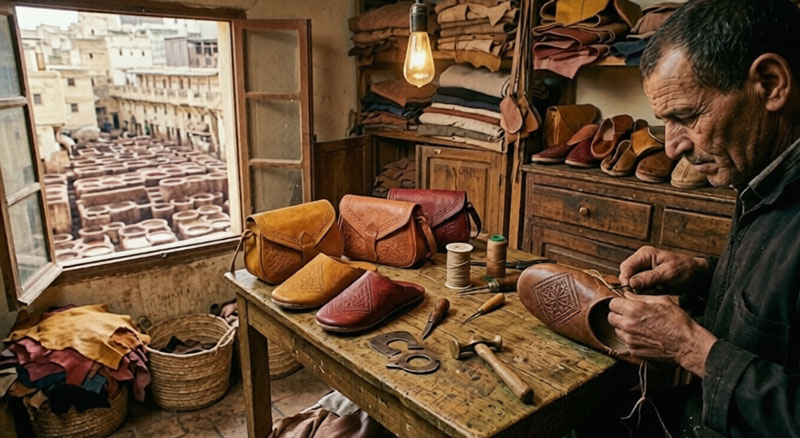
A Craft Tradition Dating Back More Than 1,000 Years
Leather production has been part of Fes since the city’s early history. For centuries, local tanners have used natural ingredients such as limestone, salt, vegetable dyes, and oils to prepare and color hides by hand. These traditional methods have survived remarkably unchanged, making Fes one of the few places in the world where visitors can still witness leather being produced much as it was hundreds of years ago.
The city’s leather-making heritage is centered around the famous Chouara Tannery, where workers process thousands of hides each year in large stone vats. The colorful scene has become one of the most photographed landmarks in Morocco and a symbol of Fes itself.
Why Moroccan Leather Is Valued Worldwide
Authentic Moroccan leather is known for more than its history. It is prized for its durability, flexibility, and unique character. Unlike many mass-produced materials, genuine leather develops a rich patina over time, meaning it often looks better after years of use.
Artisans in Fes create a wide range of products, including bags, wallets, belts, slippers, jackets, and home décor items. Because many of these goods are handmade rather than factory-produced, each piece has subtle variations that make it unique.
When you purchase authentic leather from a trusted workshop or artisan, you’re not just buying a souvenir. You’re investing in a centuries-old craft that continues to support local families and preserve one of Morocco’s most important cultural traditions.
7 Easy Ways to Tell If Moroccan Leather Is Real
You don’t need special tools or years of experience to identify genuine Moroccan leather. In fact, most authentic leather reveals itself through a few simple characteristics that are difficult for synthetic materials to replicate.
The next time you’re shopping for a leather bag, wallet, belt, or jacket in Fes, use these seven checks before making a purchase.
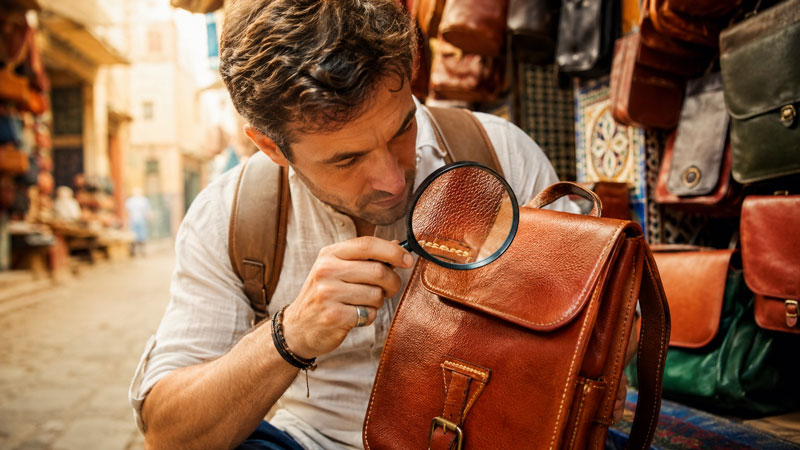
1. Check the Smell
One of the easiest ways to identify genuine leather is by its scent.
Real leather has a rich, earthy aroma that comes from natural animal hide and the tanning process. Moroccan leather, especially when traditionally tanned, often carries a distinctive smell that many people immediately associate with authentic craftsmanship.
Fake leather, on the other hand, typically smells like plastic, chemicals, glue, or synthetic materials. If the scent reminds you of a new plastic product rather than natural leather, that’s a warning sign.
Tip: Don’t confuse the strong smell of a tannery with the smell of finished leather products. A quality leather item should smell natural, not overpowering.
2. Feel the Surface Texture
Authentic leather rarely looks or feels perfectly uniform.
Run your fingers across the surface and examine the grain closely. Genuine leather usually contains small variations, wrinkles, pores, or subtle imperfections because every animal hide is unique.
Synthetic materials are often manufactured with a repeated pattern that looks almost too perfect. If every part of the surface appears identical, the material may not be genuine leather.
3. Examine the Edges
The edges of a leather product can reveal a lot about its quality.
On genuine leather items, unfinished edges often show tiny fibers and a slightly rough texture. This is because leather is a natural material made of intertwined fibers.
Fake leather typically has smooth, sealed, or plastic-like edges. Sometimes you’ll notice layers separating or a synthetic coating peeling away from the material underneath.
Whenever possible, inspect the inside seams, strap edges, or hidden areas where the material is easier to examine closely.
4. Test Flexibility and Wrinkles
Leather is naturally flexible.
Gently bend a section of the product and observe what happens. Genuine leather usually forms small wrinkles or creases that disappear when released. This movement is similar to the way human skin behaves.
Synthetic materials often remain rigid or create sharp folds instead of natural wrinkles. Some may even feel stiff despite appearing soft.
A leather item that feels unusually hard or artificial may not be made from quality leather.
5. Look at the Back Side of the Material
If you can access the inside of the product, examine the back of the leather.
Real leather generally has a soft, suede-like underside with visible fibers. It feels natural rather than manufactured.
Fake leather frequently has a woven fabric backing or a perfectly smooth synthetic layer. This textile backing is one of the clearest indicators that you’re looking at an artificial material.
6. Watch for Natural Color Variations
Traditional Moroccan leather is often dyed by hand, which can create slight variations in color and tone.
These subtle differences are normal and can actually indicate authenticity. Genuine leather absorbs dyes differently across the hide, producing depth and character.
Synthetic materials tend to display perfectly uniform colors and finishes because they are machine-made. While consistency isn’t always a sign of fake leather, overly flawless coloration should encourage a closer inspection.
7. Ask the Seller Questions
A knowledgeable artisan or workshop owner should be able to explain:
- What type of leather was used
- Whether it is goat, sheep, or cow leather
- How the leather was tanned
- Where the leather originated
- How to care for the product
If the seller struggles to answer basic questions or provides vague, inconsistent explanations, proceed with caution.
By contrast, genuine craftsmen are usually proud to discuss their materials and techniques. Their willingness to share details often reflects confidence in the quality of their products.
8. The Fire Test (Only on a Small Sample)
The fire test is one of the oldest methods used to distinguish genuine leather from synthetic materials, but it should only be performed on a small scrap piece of leather—not on a finished product.
When exposed briefly to a flame:
Genuine leather tends to char slowly and smells similar to burnt hair because it is made from animal hide.
Fake leather often melts, shrinks, or curls and produces a strong plastic or chemical smell.
Some leather workshops may have small offcuts or scraps available if you are curious about the material, but you should never attempt this test on merchandise without the seller’s permission.
While the fire test can be useful, it should be considered a last resort. In most cases, the smell, texture, grain pattern, flexibility, and underside of the material provide enough evidence to identify authentic Moroccan leather without using a flame.
Don’t Rely on Just One Test
No single test is foolproof. The best approach is to combine several of these checks together.
A product that smells natural, shows an irregular grain pattern, wrinkles when bent, has fibrous edges, and comes from a knowledgeable artisan is very likely to be genuine Moroccan leather.
The more signs of authenticity you find, the more confident you can be that you’re purchasing a product that will last for years rather than months.
Real Moroccan Leather vs Fake Leather: Quick Comparison Table
When you’re standing in a busy shop in Fes, you won’t always have time to run every test. That’s where a quick visual comparison can help you make a faster, more confident decision.
Below is a simple breakdown of the key differences between genuine Moroccan leather and fake alternatives.
| Feature | Genuine Moroccan Leather | Fake Leather |
|---|---|---|
| Smell | Natural, earthy, slightly rich scent | Plastic, chemical, or glue-like smell |
| Texture | Slight imperfections, natural grain | Too smooth, overly uniform pattern |
| Flexibility | Soft, bends naturally, forms wrinkles | Stiff or unnaturally rigid |
| Surface | Pores and irregularities visible | Printed or repetitive texture |
| Edges | Fibrous, slightly rough | Smooth, sealed, or plastic-like |
| Back Side | Suede-like, fibrous underside | Fabric backing or synthetic layer |
| Aging | Develops patina and becomes softer | Cracks, peels, or deteriorates over time |
| Color | Slight variations from hand-dyeing | Perfectly uniform, machine-like finish |
| Fire Test | Chars slowly, smells like burnt hair | Melts and smells like burning plastic |
How to Use This Table in Fes
Think of this table as your quick mental checklist. Even spotting just a few signs of authenticity—such as natural smell, uneven grain, and fibrous backing—can strongly indicate that you’re looking at real Moroccan leather.
The more boxes a product ticks on the “genuine” side, the more confidence you can have in your purchase.
Pro Tip for Buyers
Don’t rush your decision. Many of the best leather shops in Fes expect customers to take their time, compare items, and ask questions. Genuine artisans are usually proud of their work and will not pressure you into a quick sale.
In the next section, we’ll explore how to recognize different grades of real leather so you can understand quality differences even among authentic products.
How to Spot Quality Differences Even Among Real Leather
Not all genuine leather is the same. In Fes, you’ll find a wide range of quality levels, and understanding these differences can help you choose a product that truly matches your expectations and budget.
Even if a bag, belt, or wallet is made from real Moroccan leather, its durability, softness, and price can vary significantly depending on the grade of the hide and the part of the animal used.
Full-Grain Leather (Highest Quality)
Full-grain leather is considered the best quality available. It comes from the top layer of the hide and retains all of its natural grain.
- Most durable type of leather
- Develops a rich patina over time
- Shows natural imperfections (which is a sign of authenticity)
- Often used in premium bags, jackets, and long-lasting goods
This is the type of leather you want if you’re looking for something that will last for years or even decades.
Top-Grain Leather (High Quality, More Processed)
Top-grain leather is slightly sanded or treated to remove imperfections from the surface.
- Smoother and more uniform appearance
- Still durable, but slightly less than full-grain
- More resistant to stains
- Common in mid-to-high range leather goods in Morocco
It offers a balance between quality and a cleaner, more refined look.
Split Leather (Budget-Friendly Option)
Split leather comes from the lower layers of the hide after the top is removed.
- Less durable than full-grain or top-grain
- Often coated or finished to improve appearance
- More affordable, widely used in tourist products
- Can still be genuine leather, but lower quality
This is often what you’ll find in cheaper souvenir shops in tourist-heavy areas.
Goat Leather vs Cow Leather in Morocco
In Fes, two of the most common types of leather are goat and cow leather.
Goat Leather:
- Lightweight and soft
- Often used for bags, slippers, and smaller accessories
- Flexible and comfortable
Cow Leather:
- Thicker and more durable
- Used for larger items like jackets, backpacks, and furniture pieces
- Longer lifespan under heavy use
Why This Matters When Shopping in Fes
Understanding leather grades helps you avoid two common mistakes:
- Overpaying for low-quality leather marketed as “premium”
- Ignoring a lower-priced item that is actually excellent quality for its category
A good artisan will usually be transparent about the type of leather used. If you’re unsure, don’t hesitate to ask—many workshops in Fes are happy to explain the differences.
In the next section, we’ll cover the most common red flags to watch out for when buying leather so you can avoid tourist traps and overpriced products.
Where to Buy Authentic Leather in Fes
Once you know how to identify real leather, the next step is choosing where to buy it. In Fes, your buying experience can vary dramatically depending on whether you purchase from a tourist shop, a traditional workshop, or directly from artisans working behind the scenes.
Workshops vs Tourist Shops
In the medina, many shops are designed for quick sales to visitors. These stores are convenient, but they don’t always provide full transparency about how items are made or where the leather comes from.
By contrast, traditional workshops offer a more authentic experience. These are often family-run businesses where artisans are actively cutting, dyeing, stitching, and finishing leather goods on-site.
Why workshops are often better:
- You can often see the production process
- More transparency about materials used
- Better understanding of leather quality
- Opportunity to ask detailed questions
- More unique, handmade pieces
Tourist shops, on the other hand, are not necessarily bad, they just require more careful inspection from the buyer.
What to Expect in a Leather Workshop Experience
Visiting a workshop in Fes is often more than just shopping. Many artisans are happy to explain how leather is processed and show you the different stages of production.
You may see:
- Raw hides being prepared
- Natural dyeing techniques
- Drying racks with finished leather
- Craftsmen stitching and assembling products by hand
This kind of experience gives you a much deeper appreciation of Moroccan leather and helps you better understand the difference between real craftsmanship and mass-produced goods.
One of the most famous places to observe this tradition is the historic Chouara Tannery, where leather production has been carried out for centuries.
Buying Directly from Artisans
When you buy directly from a craftsman or workshop, you are not just purchasing a product—you are supporting a living tradition.
Benefits include:
- Fairer pricing without multiple middlemen
- Higher chance of getting genuine leather
- Ability to customize products (size, color, design)
- Stronger connection to the story behind your item
Many artisans are also open to small customization requests, such as adding initials or adjusting designs, especially if you are buying directly from the workshop.
Final Buying Advice
The best leather-buying experience in Fes comes from a combination of knowledge and patience. Take your time to compare different workshops, ask questions, and observe how products are made.
When you choose carefully, you’ll not only bring home a beautiful leather item, you’ll also carry a piece of Moroccan heritage with you.
In the final section, we’ll answer the most common questions travelers have about buying leather in Fes, so you can make your decision with complete confidence.
Experience Authentic Leather Craftsmanship in Fes
Go beyond shopping and discover how authentic Moroccan leather is truly made. Join a hands-on workshop experience in Fes where local artisans reveal centuries-old tanning and crafting techniques inside a working leather workshop. See, feel, and understand the difference between real and fake leather directly from the source.
Frequently Asked Questions About Buying Leather in Fes
How much should a genuine leather bag cost in Fes?
There is no fixed price, but quality and craftsmanship matter more than location. Small leather goods like wallets or slippers can be relatively affordable, while high-quality handmade bags or jackets cost more due to the time and skill involved.
If a large leather item is extremely cheap, it is more likely to be synthetic or low-grade material. On the other hand, very high prices in tourist-heavy areas don’t always guarantee better quality either.
Does real Moroccan leather smell strong?
Genuine leather often has a natural, earthy smell, especially when freshly made. However, finished products should not smell overwhelming or chemical-like.
If a product smells strongly of plastic, glue, or synthetic chemicals, it is likely not genuine leather.
Is leather from the tannery better than leather from shops?
Not necessarily, but visiting a place like the historic Chouara Tannery gives you a better understanding of how leather is produced.
Many tannery-linked workshops work directly with raw materials and traditional methods, which often increases transparency. However, quality still depends on the individual artisan and the grade of leather used.
Can genuine leather still have imperfections?
Yes, and in many cases, imperfections are a sign of authenticity.
Natural marks, uneven grain, and slight variations in color are normal in real leather. Mass-produced or synthetic materials are often too perfect, which can actually be a warning sign.
What is the best leather souvenir to buy in Morocco?
Popular choices include:
- Leather slippers (babouches)
- Handbags and backpacks
- Wallets and cardholders
- Belts and small accessories
- Traditional poufs and home décor items
The best souvenir depends on your needs, but smaller items are often easier to carry and still showcase Moroccan craftsmanship beautifully.
Final Tip
When in doubt, trust your senses, smell, touch, flexibility, and texture are usually more reliable than labels or marketing claims.
A careful buyer in Fes can easily find authentic, high-quality leather that lasts for years and carries the story of Morocco’s centuries-old craftsmanship.
Buy With Confidence
Buying leather in Fes is not just shopping, it’s an experience rooted in tradition, craftsmanship, and culture. Once you understand the key signs of genuine Moroccan leather, you can explore the medina with far more confidence and avoid common tourist traps.
Take your time, compare options, and don’t be afraid to ask questions. The best pieces often come from workshops where artisans are proud to show their work and share their knowledge.
With the right approach, you’ll return home not just with a souvenir, but with a meaningful piece of Moroccan heritage.