
Why Does the Fes Tannery Smell So Bad? The Real Reason (It’s Not What You Think)
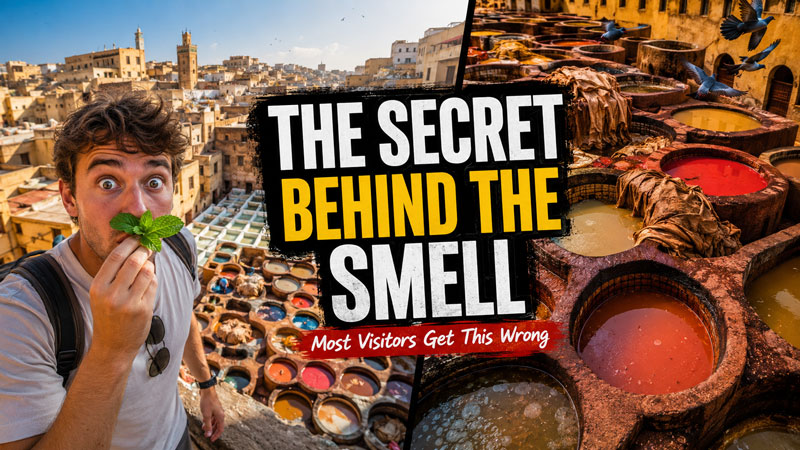
Ask anyone who has stood on a terrace overlooking the Chouara Tannery in Fes, and they will tell you the same thing before they mention the colors, the history, or the view: the smell hits first. It is sharp, animal, and impossible to ignore. Most tour guides will hand you a sprig of fresh mint and tell you to hold it under your nose. Few will explain exactly what is producing that smell, or why an entire neighborhood in the world’s oldest continuously inhabited medina has tolerated it for over a thousand years.
The short answer involves pigeon droppings. The full answer is more interesting, and once you understand it, the smell stops being something to simply survive and becomes part of the story.
So what actually causes the smell?
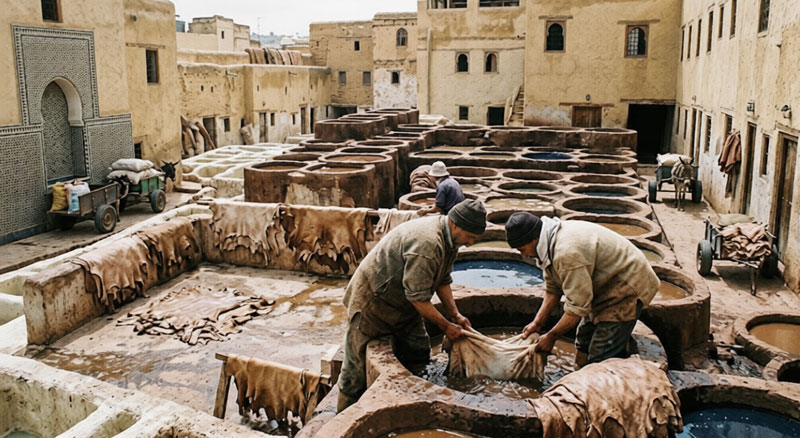
The odor comes from the very first stage of leather production, long before any dye touches the hide. Raw animal skins, mostly from cows, sheep, goats, and camels, arrive at the tannery stiff, hairy, and unusable. To soften them and strip away hair and remaining tissue, artisans soak the hides for two to three days in large stone vats filled with a mixture of quicklime, water, and yes, pigeon droppings.
The ammonia naturally present in the droppings acts as a softening agent. It breaks down the proteins holding hair and flesh to the hide, loosening everything so it can be scraped away by hand. Combine that with the salt, cow urine, and lime traditionally used alongside it, and you get the distinctive smell that tourists associate with the entire tannery district, even though this is only the first of several stages.
Local tip: the mint isn’t just tradition for tradition’s sake. The strong menthol scent genuinely helps mask the ammonia smell, and most rooftop shops will offer you a sprig the moment you arrive. Take it.
Why this thousand-year-old method still survives
It would be easy to assume a modern chemical process has simply not reached Fes yet. The reality is closer to the opposite. The tanneries of Fes, the largest of which is Chouara, have operated this way since at least the 11th century, and the technique has been deliberately preserved rather than replaced. Vegetable and lime-based tanning produces a leather with a texture, durability, and natural patina that mass-produced chrome-tanned leather cannot fully replicate, and it is part of what gives Moroccan leather its international reputation.
There is also a cultural dimension. Leatherworking has been a defining trade of Fes since the city’s founding, passed from father to son for generations. Walking the terraces above the vats today means watching a craft practiced almost exactly as it was a thousand years ago, smell included.
It would be easy to assume a modern chemical process has simply not reached Fes yet. The reality is closer to the opposite. The tanneries of Fes, the largest of which is Chouara, have operated this way since at least the 11th century, and the technique has been deliberately preserved rather than replaced. Vegetable and lime-based tanning produces a leather with a texture, durability, and natural patina that mass-produced chrome-tanned leather cannot fully replicate, and it is part of what gives Moroccan leather its international reputation.
There is also a cultural dimension. Leatherworking has been a defining trade of Fes since the city’s founding, passed from father to son for generations. Walking the terraces above the vats today means watching a craft practiced almost exactly as it was a thousand years ago, smell included.
How to visit without the smell ruining your trip
The good news is that the smell is very manageable with a little preparation, and it should not be a reason to skip one of the most genuinely memorable sights in Fes.
- Accept the mint. It is offered for a reason, and it works better than most people expect.
- Visit mid-morning. The smell tends to be less intense before the midday heat builds, and the light is better for photos.
- Stay a few extra minutes. Most visitors find the smell becomes far less noticeable after the first minute or two, once your senses adjust.
- Go with someone who knows the workshops. The terraces with the best views, the least crowding, and the most patient artisans are not always the ones closest to the entrance.
See the process up close, smell and all
Reading about the tanning process is one thing. Standing on a terrace above the vats, watching artisans work barefoot among a thousand years of tradition, is another. At Fes Leather Workshop, our guided visits take you beyond the standard terrace view: you can watch the full process explained by people who grew up around it, then sit down with a craftsman and shape your own piece of leather using the same techniques you just saw in the vats below.
If you would rather skip straight to working with the finished leather, our hands-on leather workshops let you design and stitch your own bag, wallet, or pouch to take home, no prior experience needed.
Frequently asked questions about the Tanneries of Fes
Why does the Fes tannery smell so bad?
The smell comes from the first stage of tanning, when raw hides are soaked for two to three days in a mixture of quicklime, water, and pigeon droppings. The ammonia in the droppings softens the hide and loosens hair and tissue, which produces a strong, distinctive odor that lingers around the tannery district.
Do tanneries in Fes still really use pigeon droppings?
Yes. The Chouara, Sidi Moussa, and Ain Azliten tanneries in Fes still use traditional methods that have remained largely unchanged for centuries, including pigeon droppings as a natural softening agent, alongside lime and salt.
How do I avoid the smell when visiting the Fes tannery?
Accept a sprig of mint when offered, since the menthol scent helps mask the ammonia smell. Visiting mid-morning, before the midday heat intensifies the odor, also helps, and most visitors find the smell becomes far less noticeable after the first few minutes.
How long does it take to turn a raw hide into finished leather?
The full process, from soaking raw hides to dyeing and sun-drying the finished leather, takes around three to four weeks using the traditional methods still practiced in Fes.